

The Contribution Project in the Spotlight — and What Comes Next for Purpose Commons
After The Washington Post shared new research on youth contribution, we’re reflecting on what this moment means for our growing purpose movement.

Everyone has dreams about projects they’d like to complete, but to actually *do* said project is a different matter because we’ll always find some reason why we can’t or don’t have time. With money and accountability from the Contribution Project, I made it happen.”
-2024 Contribution Project Participant.
The Washington Post highlighted new research from Dr. Anthony Burrow at Cornell University’s Purpose and Identity Processes Lab — work that also sits at the heart of our partnership with the Purpose Science & Innovation Exchange (PSiX).
The article shared findings from the Contribution Project, a study showing that when young people are given small micro-grants to pursue something that matters to them — to make a contribution — their sense of purpose, belonging, and well-being all increase.
For us, this work represents something we’ve believed for a long time: that purpose isn’t discovered in isolation. It’s cultivated through community, and it grows stronger when young people are trusted to give something of themselves to others.
Expanding the Circle of Learning
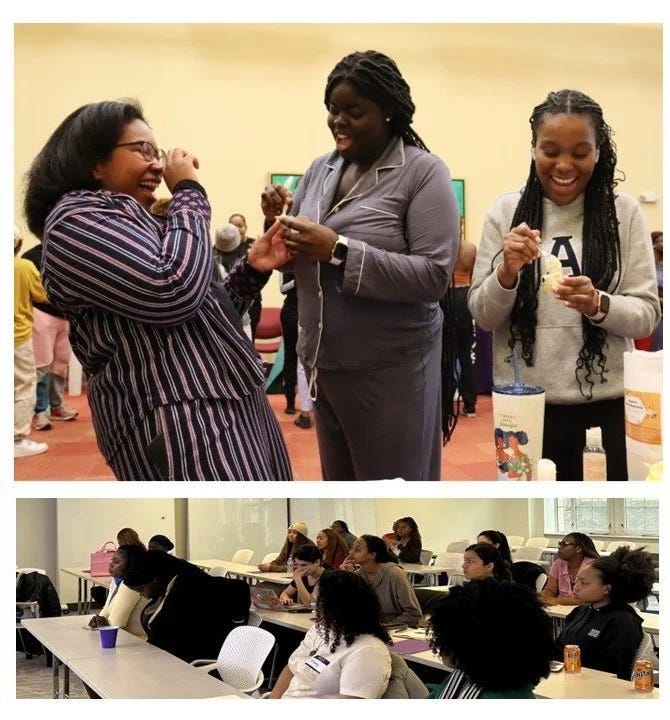
“The most rewarding part of this experience was seeing the real difference we made in people’s lives. We brought mental health resources and support to those who needed it most, and it was incredibly fulfilling to know we were making a tangible impact”
- 2024 Contribution Project Participant
In 2023, building on Dr. Anthony Burrow’s early work with college students across the State University of New York (SUNY) system, we joined forces with PSiX to bring the idea to life on a national scale — reaching a broader and more diverse community of youth.
Together, we launched the National Contribution Project, engaging young people ages 14 to 25 across the country to explore how small acts of contribution shape purpose in everyday life.
The stories of contribution that have emerged are deeply moving:
One young person created a reading-friendly space at their former elementary school to foster literacy and give back to the community that raised them.
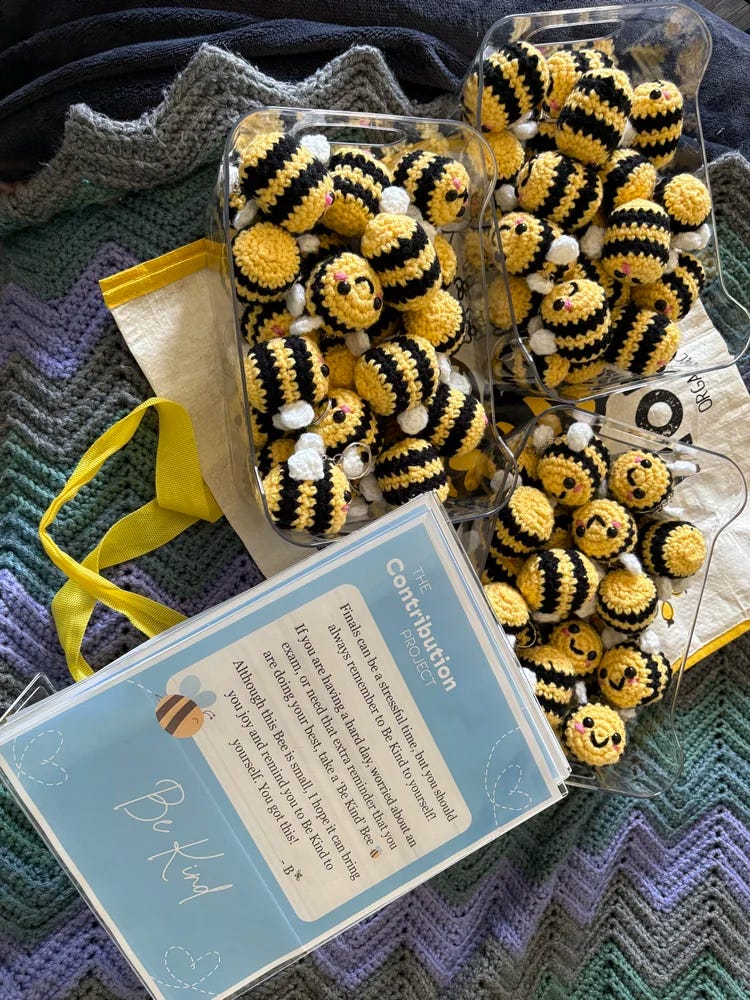
Another designed a wellness project, crocheting small, anonymous tokens of encouragement to remind classmates that someone was looking out for them during stressful times.
A participant built a therapeutic garden for nursing home residents, where tea-making became a ritual of connection and care.
Others organized mental health gatherings for students of color, creating moments of reflection, restoration, and shared healing.
Some focused on the environment, building birdhouses, planting gardens, and helping their communities reconnect with nature.
And others supported local bookstores and literacy nonprofits, helping families and children find meaning together through reading.
Although these projects are not massive in scale, together, they tell a powerful story about what happens when young people are given space, support, and trust to bring their ideas to life. You can read about more projects here.
What Made It Possible
The National Contribution Project only works because of the extraordinary network of partners who helped bring it to life — from the funders who believed in the idea, to the community organizations that opened their doors, to the young people who made it their own:
GripTape, Hopelab, The Gambrell Foundation, Arthur M. Blank Foundation, Resonance Philanthropies, Civics Unplugged, Interact for Health, Nebraska Children’s and Families Foundation, Carmel Hill Fund, and so many more.
We’ve done this work through a combination of direct-to-youth engagement, partnerships with youth-serving organizations, and regional collaborations that help root the research in local context and community voice.
It’s a reminder that research doesn’t have to be something done to communities — it can be something built with them.
“I felt more freedom to fulfill my mission because I had some money to work with… This project gave me the chance to realize my passion of bringing speech and debate to underserved communities. I am so excited to see students learn critical thinking skills and become more engaged in civics.”
- 2024 Contribution Project Participant
From Research to Relationship
Now we’re digging into what we’ve learned — together with our partners at PSiX — to better understand how and why these small acts of contribution make such a meaningful difference.
We’ll be hosting one more cohort of the National Contribution Project in spring 2026, and then taking the summer to go deep into the data — making sure we’re finding consistent results across a broader, more diverse group of youth. From there, we’ll begin to explore how communities, schools, and youth-serving organizations might adapt what we’re learning in ways that reflect their own local strengths and needs.
This next phase isn’t only about analyzing data — it’s about translating evidence into insights that young people and communities can use.It’s early, but one thing is clear: this work is worthwhile. Now it’s time to expand the amount of youth who are able to contribute in ways that matter to them.
Building on the Foundation of Design Research
This year, we also took time to listen — deeply — to youth and youth-serving leaders across the country about what should come next. Out of those conversations came our next two Plot Themes: Identity & Lived Experience and Exploration & Exposure.
You can see how we got there — and what we heard along the way — in our Design Research Report. It captures the ideas, tensions, and hopes that emerged through months of co-design with our partners in the field.
We’re now at the starting line with these new themes. And while they’ll look different from the Contribution Project, so much of what we’ve learned — especially how to build a national research effort that gives as much as it learns — will carry forward. The Contribution Project is proof of what’s possible when we co-create with community, and of what happens when Purpose Commons and PSiX combine the best of practice and science.
What Comes Next
We’re excited to share more about what we’re learning from the National Contribution Project — and how those insights are shaping what’s next. We’ll be posting reflections, tools, and stories here that show how purpose grows when we center contribution, belonging, and community.
If you’re part of this growing ecosystem — or want to be — we’d love for you to stay connected.
Subscribe to Purpose Commons to follow the journey and join a community dedicated to cultivating purpose everywhere young people live, learn, and contribute.